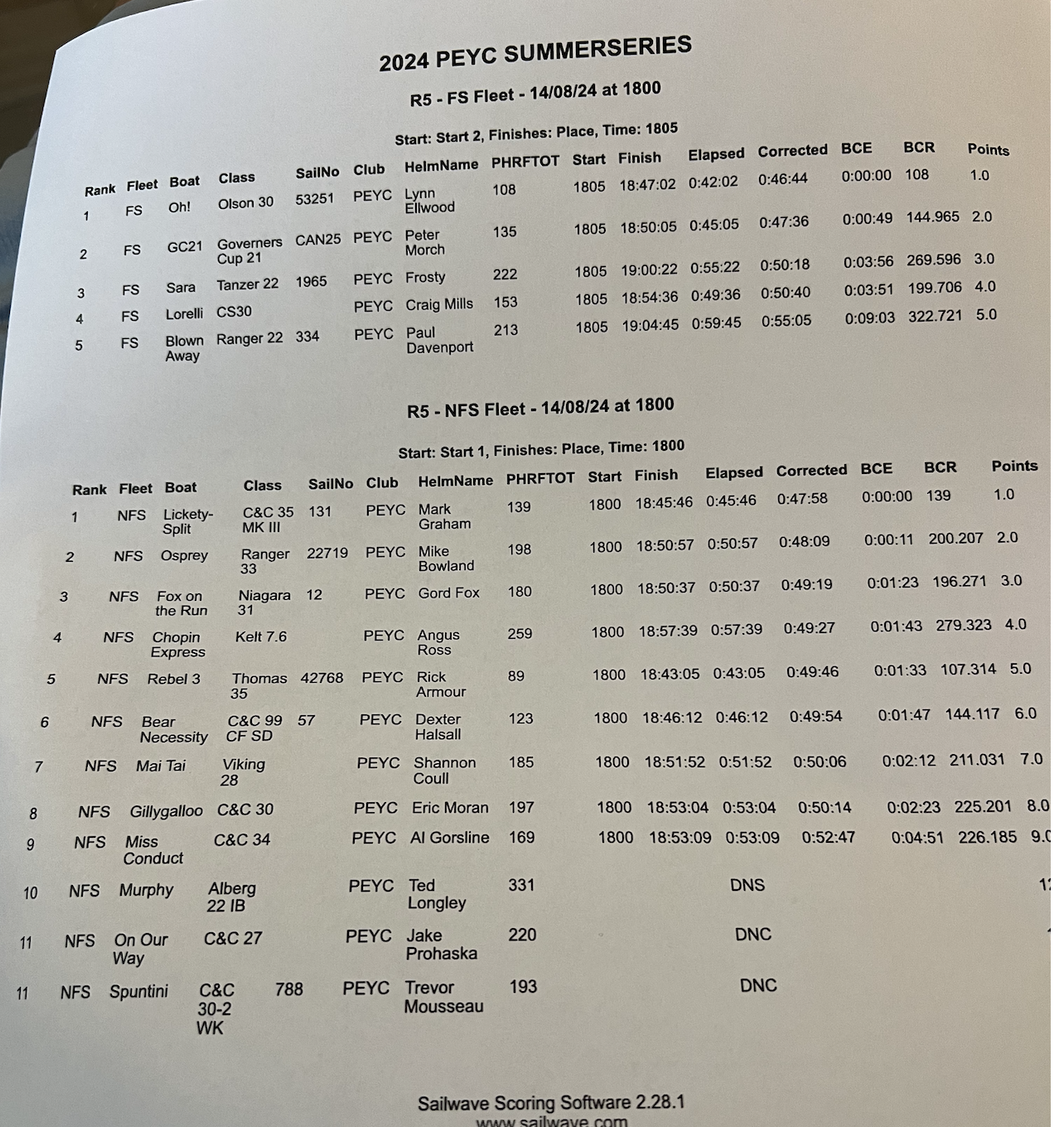
We won this race.
Series
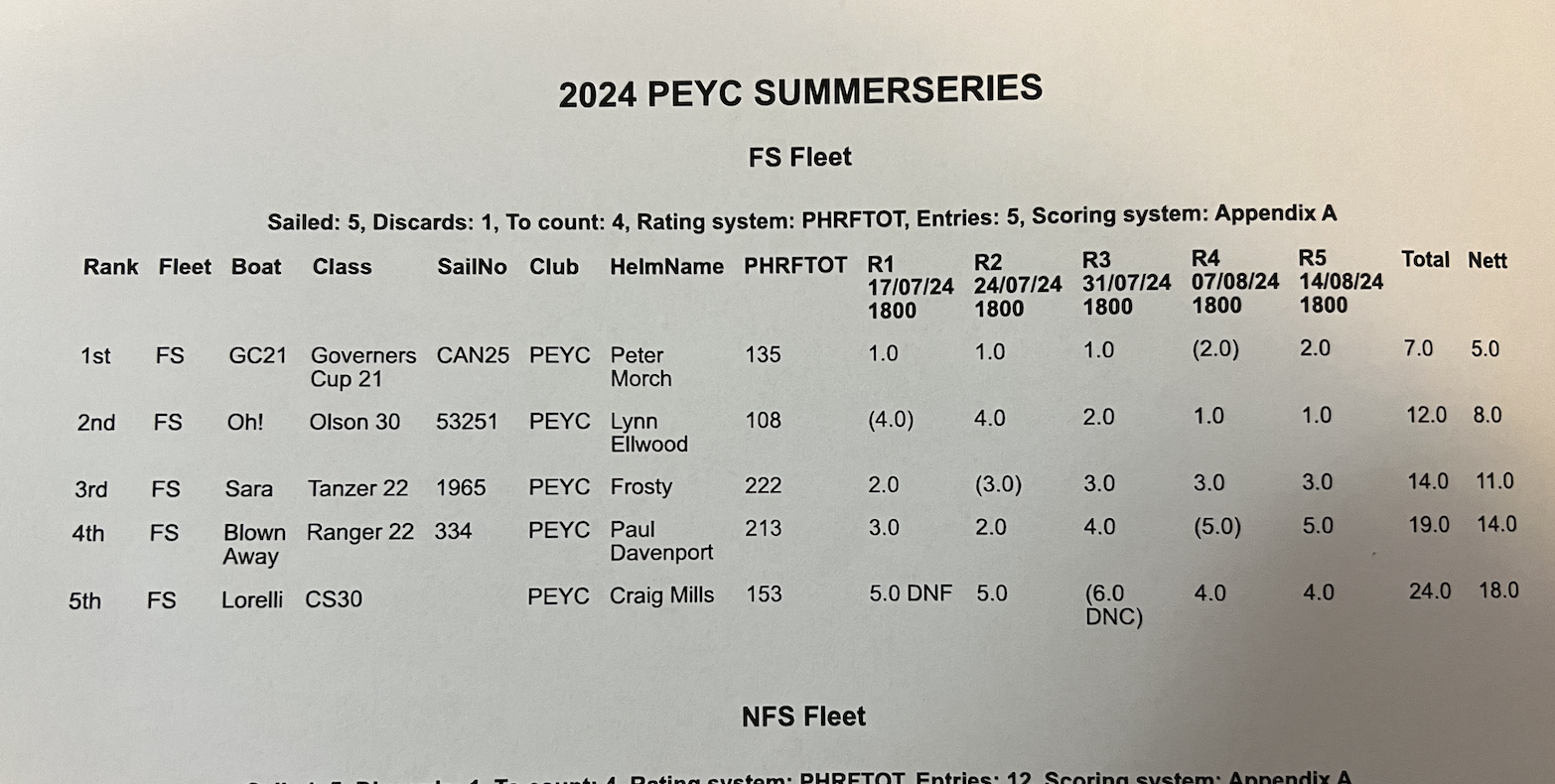
2nd in the series - The wind was strange. Start the race in light air. Sometimes GLASS. Then we fight around the course in the light stuff and finish or almost finish. Then the heavy air - 22 knots - comes in and flattens us with our #1. The slower boats are heading down wind planning in the big breeze which we didn’t have. They close up to us. We get killed. Oh well, that’s PHRF racin’.
SJE/LKE/JV/DV/JN
8-13 knots
Course 1-3 twice around
We used the grey spinnaker not blue.
No Cross sheeting
We were not sure about the wind. The models said 8-12, all except the European model which has been the most accurate. It said 4-7.
We went out with out selecting a headsail.
The technique of backing down while putting up the main sail is working. (a) it reduces the apparent wind angle we experience while raising the sail which makes the flapping less, and (b) it forces a back down - a long one - to get the weeds off if any.
We then ping’d the line as always. This is really important. Knowing where the line is at the start allows me to push the line and get close for a good start.
Then we watched. We watched the other boats, their close hauled angles, where they were on the course, are they heeled a lot (windy) or flat?
Rebel went to the windward mark with a #2 or #3 we watched their angle. We could see they were headed on stbd but they had good breeze, heeling a lot once they past the mark.
We also noted they changed their headsail. They went to a #1. To they told us that they felt the breeze was going to be lighter.
We watched the other boats, and decided on our path up wind. Start on stbd with clear air, the line was pretty square to the wind. Head to the left until the strong wind we saw in the middle of the course ran out, tack just before that and head to the mark.
Still no head sail up, we watched the start of the non-flying sails. There were several port tackers, including Gord down at the ping. Gutsy. In fact it was foolish. They got lousy starts.
Rebel doing their standard Vanderbilt start came in late and had trouble finding a hole to scoot through.
Rebel and Lickety headed left, doing just what we had decided to do.
We put up the #1, not the #3, and started to manoeuvre.
Just before the start, say 30 seconds, the Tanzer got in front of us heading to the boat. I had to decide if we were going to go below them, if I did we would pretty quickly sail out from under them but we would be ‘stuck for a time’ there. So instead I slowed down so I could head up by crossing their transom. I pinched up and headed to the boat (RC). They sailed on, along they could have tried to squeeze us out - they didn’t because they were slow.
We got up to speed by bearing away in the space the Tanzer left us. We hit the line at speed at exactly 0. Good start.
Clear air, we executed our plan.
The GC21 was lower on the line but also in clear air. We slowly squeezed down on them - they were trying hard to point high which they don’t do well. We came down on them at speed.
We waited a little longer than I wanted to make them slow in our gas. I waited until the had to tack, and we tacked right on them.
We sailed them through the NFS fleet as it was rounding the windward mark, holding them up.
In retrospect I wonder if instead I should have taken them very high before the NFS fleet became a problem and perhaps forced them below us. That was the big wind shadows out the downwind boats would have impacted them even more. As it was we too felt the wind shadows.
It worked out, we got to the windward mark head. The team set the pole and had the chute hoisted quickly.
We are finding that we need to keep the genny tightly sheeted and not eased - if possible - before raising the chute to make the raising easier - less mess for the chute to get tangled in. So I reached down and pulled in the gennie sheet and locked it as the hoist was happening. That worked.
The GC was lower than us, we held them there because they are slow on deep angles. They then crossed behind us 1/3 of the way down the run.
Because we knew the wind was softer on the left side (facing up wind) than in the middle we sailed a little hotter to push them even further over to the softer air, then we returned to a deeper angle.
We found the grey spinnaker was fine, except it was folding in the middle strangely. We were fast, which was good. JV did a good job of paying attention to the trim. LKE worked the guy. Together they kept the chute optimally set most of the time.
As we neared the leeward mark, the GC was well behind us, in the light stuff on the left.
We gybed without the pole. Stowed the pole. JN did a great job being the pole on the new gybe. We headed into the leeward mark fast. We got the gennie up.
We were perhaps 2 boat lengths from the mark when we dropped, it went smoothly.
The rounding was good but the gennie halyard was quick slack. Using the active winch as a turning block we got the gennie up all the way. I had to drop the main to get the main outhaul tightened.
The GC got buried in NFS boats at the leeward mark.
We executed the middle of the course in lots of wind plan again doing a loose cover on the GC. We stayed more to the right middle.
At the windward mark, Gord was steaming along on port, we tacked over to port well low of him. We sailed under him enough to tack to starboard and cross him but to do that we ended up over standing.
We came rolling into the mark on a close reach very fast, but we wasted some time getting stuck beside Gord. I could have tacked sooner. But it would have been ‘shouty’ - we would have been on starboard but the argument would have been did we give him room to respond. Burning Gord off was an easier way to go although it cost us.
The hoist was again smooth. The bow team had time to prepare the pole, cheat out the guy.
We were fast on the run, hitting 7.3 knots. At pretty low angles.
I gybed a little to early and so we were sailing by the lee too much and the main was wanting to flipped over the stbd. I should have given it another 10-20 meters before flipping. Come in deep as is our plan but not by the lee - that was slowish.
Around rounding for the finish.
The boat was favoured - we hit that. Hard to cross the line on stbd tack, so hit the boat and flipped to port for the gun.
It was a solid race. The team knew what to do, I am mostly drove so that they were able to execute what they knew how to do. Then I drive badly, or drive aggressively because of a situation the team’s tasks get really hard really fast, even though they know what to do, its hard for them to execute.
Our on board communications were excellent. People remembered to break the up/dn on the pole when DV called for it.
And the weather was warm and sunny. Even a nice sunset on the way home.
We won the race. Looking at the corrected time we also corrected out to have beaten all the NFS fleet too. So Lickety for example with its NFS rating, we still beat them with our FS rating.
I believe we sailed the boat almost to her potential. It felt great. Thank you team!
S