Creation: 260725 0907 Last Modified: 260725 0907
This Report is Accompanied by the Day 2 Report here 260726 Golden Regatta Day 2 of 2
William Benjamin Ellwood, took some drone footage and stills of the race on both Saturday and Sunday. Please find the Google Photo Album here https://photos.app.goo.gl/vM719NfYK2wp4rSTA
I picture is worth a thousand words, videos more so. Thanks Will!
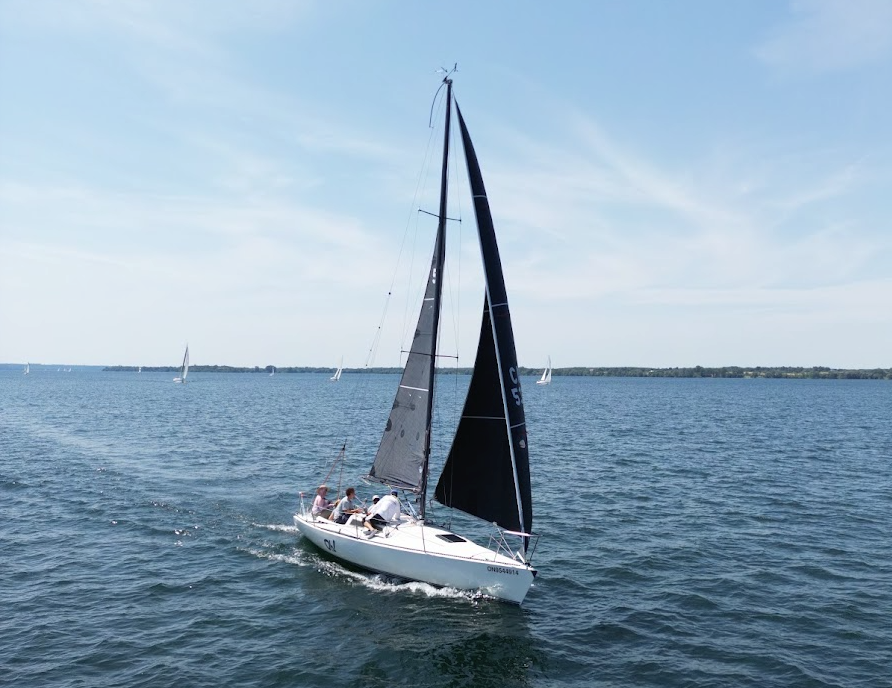
Crew
| Position | Person |
|---|---|
| Helm | Lynn Ellwood |
| Main | Melissa Ella Warren |
| Middle 1 | Max Tootle |
| Middle 2 | Anik Karimjee |
| Mast | |
| Bow | Steve Ellwood |
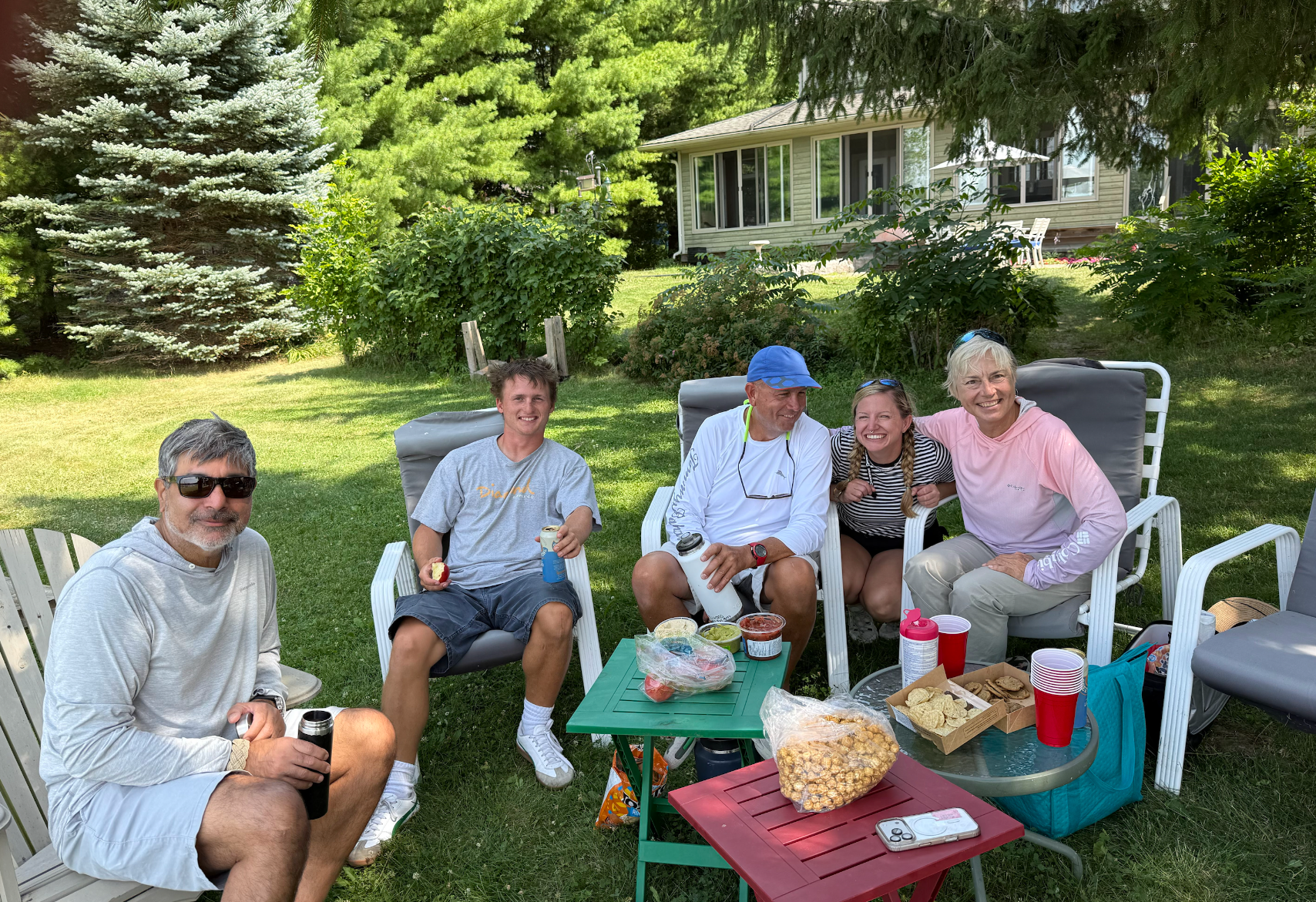
Notes from Skippers Meeting
Start Macfarlane and mark 12:15 GPS time starts sequence Start 12:20 Virtual Gun Finish 165 degrees at mast is bearing off of a white and red Ball combination in Pinyers Sunday 11:00 start sequence Finish MacFarlane and red ball Take own GPS time
Sailing Instructions
Course
Pre Skippers meeting it is simple. leave PEYC finish at Prinyers. We shall see. And it was. A white sail drag race.
Weather
At 0930 Looks like a beam reach in light wind 9-11 gusting to 10-13. Sunny and lovely. The decision to go spinnaker or white sail is an issue. Sunday is forecast to be an upwind battle - so white sail will pay. But Saturday is marginal close reaching with the spinnaker for some of the race - but likely not enough to justify carrying the higher rating for the whole race…Hmm. Decision held for skippers meeting. We decided to go white sail. Only Lorieli, the Ranger 22 and the Tanzer 22 flew spinnakers. The wind was as ‘unpredicted’ blew 10-20 knots, peak 24, minimum 5. Mostly from the S, SSE, SE - so not close hauled (except once in while), mostly a close gennie reach. In fact we used the outside reaching) sheets for the leg from the start (after the start) to most of the way to Glenora ferry then it was inside sheets the rest of the way. Weather-shemeather. White was the answer - whew!
Race Result
The Golden is a two race series. So this race, Saturday was our first of two.
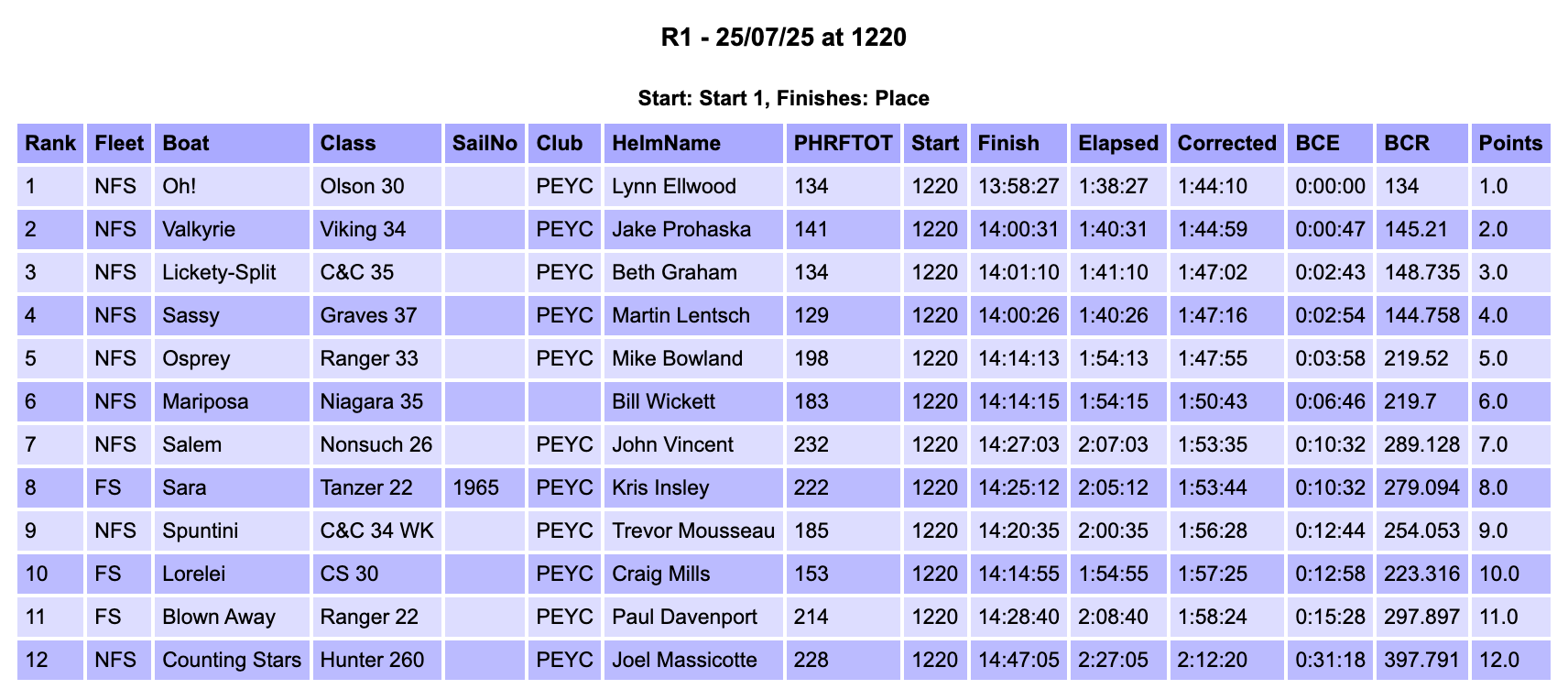
And we won. But only by 47 corrected seconds. The club uses PHRF Time on Time rather than Time on Distance for these calculations. For some delightful reading about T0T see 230625 PHRF Time over Time.
Race Review
White sail, no tacking, warm and sunny, 12 nm, flat water. Sounds like the perfect casual summer sail - right?

This race was a LOT of work. Constant, constant, jib trim and main trim. Minor course changes. Decisions about should we be higher or lower right now. Are we making the northern ferry dock, is a ferry coming? Are we making the light house? Should we be in the middle of the channel or to one side or the other? Endless questions and so endless decisions. And Trim trim trim. Boat balance, bodies in, bodies out, bodies in. This race required constant vigilance. And it rewarded constant vigilance.
The start was downwind, a reach on stbd to cross the line, between MacFarlane dock and a red ball.
We came at the pin on stbd with 30 seconds to the gun. The line was maybe 45 seconds. Our decision to come back ‘early’ was made to stay in front of Lickety. We slowed, while close hauled and clear ahead of them, to slow them too. Valkarie, with Muren driving, was pointing their bow directly at the middle of the line on a reach. And below us, further long on the start line.
As we approached Valkarie I told them they had to head up to avoid us - we were leeward boat on stbd.
It seems Muren didn’t understand that these pesky windward/leeward rules applied to pre starts and starts and races - doesn’t matter what stage of the race you are in - they apply.
Kindly Mark shouted over to Muren to tell him he had no rights and had to yield.
Muren was claiming the start gun had gone and that I was required to let him through - nope that was wrong.
Didn’t matter - I figured Valkrie would not be an issue for us once we got rolling.
We dropped down to the reach under Valkarie - it took us a while to clear our breeze since Valarie was upwind of us.
Lickety was below us and trying to keep their breeze clear from our interference too.
With some determined driving and trimming we pulled away.
Martin on his G37 came steaming in aiming below Valkarie, intending to pass him to leeward, and us, intending to pass us to windward.
We were out of it by the time the G37 and Valkarie started mixing it up.
The concern was how close we should come to the shore (shortest course) without putting us in a wind shadow of the land.
Lickety stayed out. We were close but no shadow - threading the needle.
We were lead boat as we rounded the corner and - spoiler - we stayed in front the rest of the way.
But only JUST. Licketty, Valkarie and the G37 were close on our heels the whole time.
As we approached the ferry Lickety and Valkarie were to the north, I wasn’t sure they would fetch the northern dock point. We were mid-channel - taking no chances.
We got through and headed off to the next point, the lighthouse.
Same again, Lickety and Valkarie were low to the north side. We aimed to be in the breeze lines that were mid-channel or to the south. The temptation to get over the south side was strong but (a) don’t leave your competitors and (b) we were occasionallywiping out when the gusts hit us - who needs more wind?
As we approached Pinyers, the finish line was 165 degrees from the Mike mark balls. No need to be ‘near’ the marks, just cross a 165 bearing, so we could keep close reaching at speed. The three behind us headed up as though they wanted to cross need the ball - strange. I think that slowed them all down.
Lessons Learned
Trim trim trim. Weight in out in out - keep the boat at 10 degrees.
Windward Mark Rounding Lynn, Mellisa and I had a great discussion, over coffee and staggeringly good peach danish, about mark rounding flowing from the discussion about VMGC (velocity made good course - when you are going to a mark you can fetch on one tack - like Saturday).
In the discuss I realized Lynn’s problems with steering down at the windward mark rounding were not about the tight jib ‘preventing’ her from turning down - it was heel.
When heeled the low side of the hull is more in the water than the high side. So we have high pressure on the low side and low pressure on the high side. The nature wants to rebalance this imbalance, so the boat wants to head up.
Doesn’t matter the centre of effort of the jib is dragging the bow down, the heel imbalance force overwhelms the jib force.
So we need the boat flat when rounding - balanced so the rudder doesn’t need to overcome the heeling forces.
To do that we need the sails heavily eased. First the main. Right off and blown - the centre of effort idea still holds on a boat that is flat. Blow the main’s centre of effort.
To ensure that happens, 3 boat lengths from the mark helm will call for the boom bang to be blown - opened. That way, once the traveller is all the way down, if the heel doesn’t come off, the main sheet can be eased next. And in addition to an eased main allowing the boom to swing out more the blown vang also allows the boom to rise up, curving the leech of the main and de-powering it.
If those operations still don’t take the heel off to a manageable level then go to the jib. Start easing it.
An eased jib is fine but an eased 155% gennie makes getting the spinnaker up a challenge since it has to go under it. So do this last.
And the uneased jib/gennie also turns the boat down. So do it last.
Movement on the boat - Lynn reported that yesterday she felt ever move I made.
The lesson is that when the wind is light we all feel the disruption to the sails and or the hull in the water. So of course move slow and thoughtfully in light air. But the same impact is present in all air conditions. Movement on an Olson translates directly into an impact on the sails, and impact on the rudder and ultimately, speed.
So under Lynn’s laser eyed monitoring I have to learn to be aware of this as I move, as do we all.
Comments
Name and email required; comments appear once Steve approves them.